Cubism is an early-20th-century art movement centered on representing objects from multiple viewpoints simultaneously.
Instead of portraying a subject from a single, fixed angle, Cubist artists deconstructed forms into geometric planes, analyzed their structures, and reassembled them into dynamic compositions.
According to Tate Museum’s definition, Cubism “abstracts form, breaks down objects into multiple perspectives, and reconstructs them through geometric simplification.”
This approach challenged the traditional rules of perspective, depth, and realism, replacing them with a new visual language based on structure and conceptual interpretation.
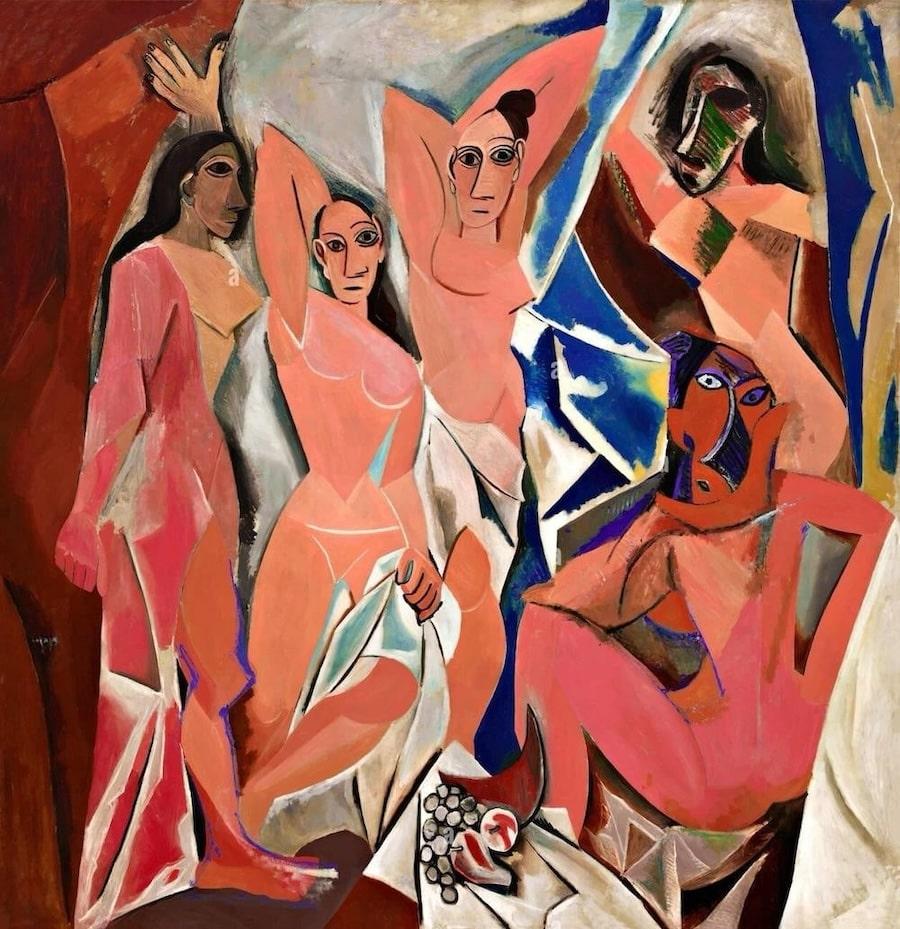
Les Demoiselles d'Avignon, 1907 by Pablo Picasso
Cubism emerged around 1907–1908 through the groundbreaking work of:
Picasso’s Les Demoiselles d’Avignon marked an early rupture with classical form, while Braque’s experiments with geometry and perspective helped develop Cubism into a coherent movement.
Together, the artists worked so closely that critics described their partnership as “two mountaineers roped together.”
Their shared mission:
to dismantle conventional representation and reconstruct reality through form.
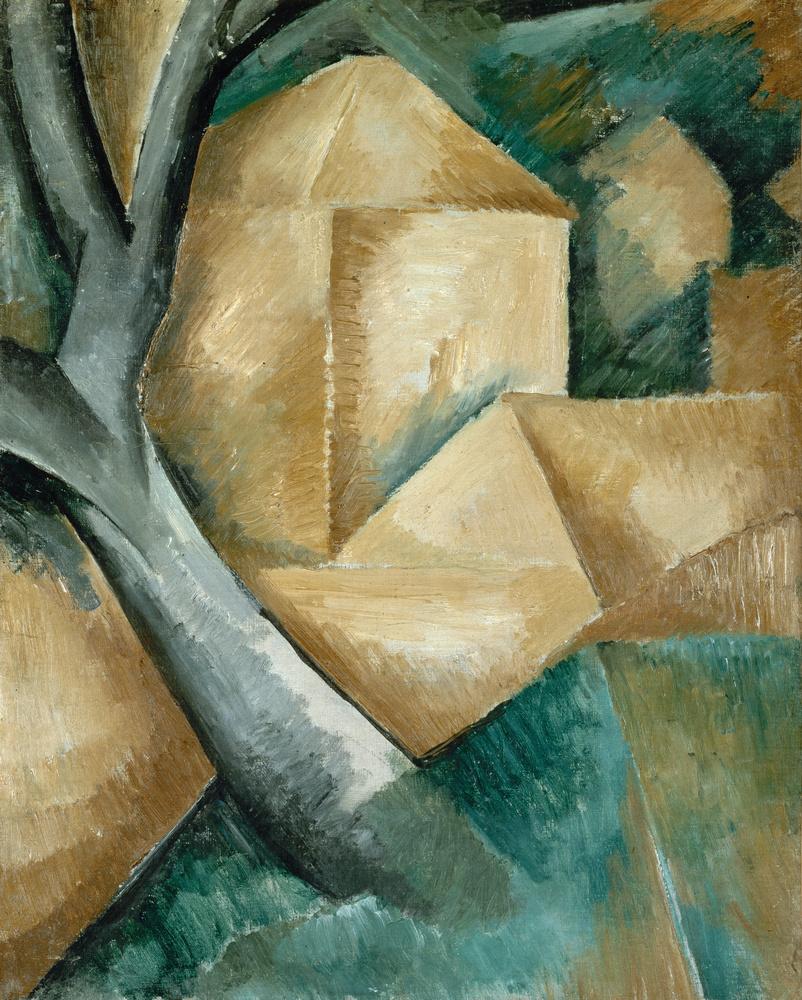
Houses at L''Estaque, 1908 (oil on canvas)
Cubism argues that reality is not experienced from a single vantage point.
We move, we shift, we perceive objects from countless angles — and yet traditional art freezes vision into one static moment. Cubism rejected this limitation.
In Cubist thinking:
Cubism proposes:
“Reality can be dissected, reimagined, and rebuilt.”
This idea reshaped the entire trajectory of modern art.
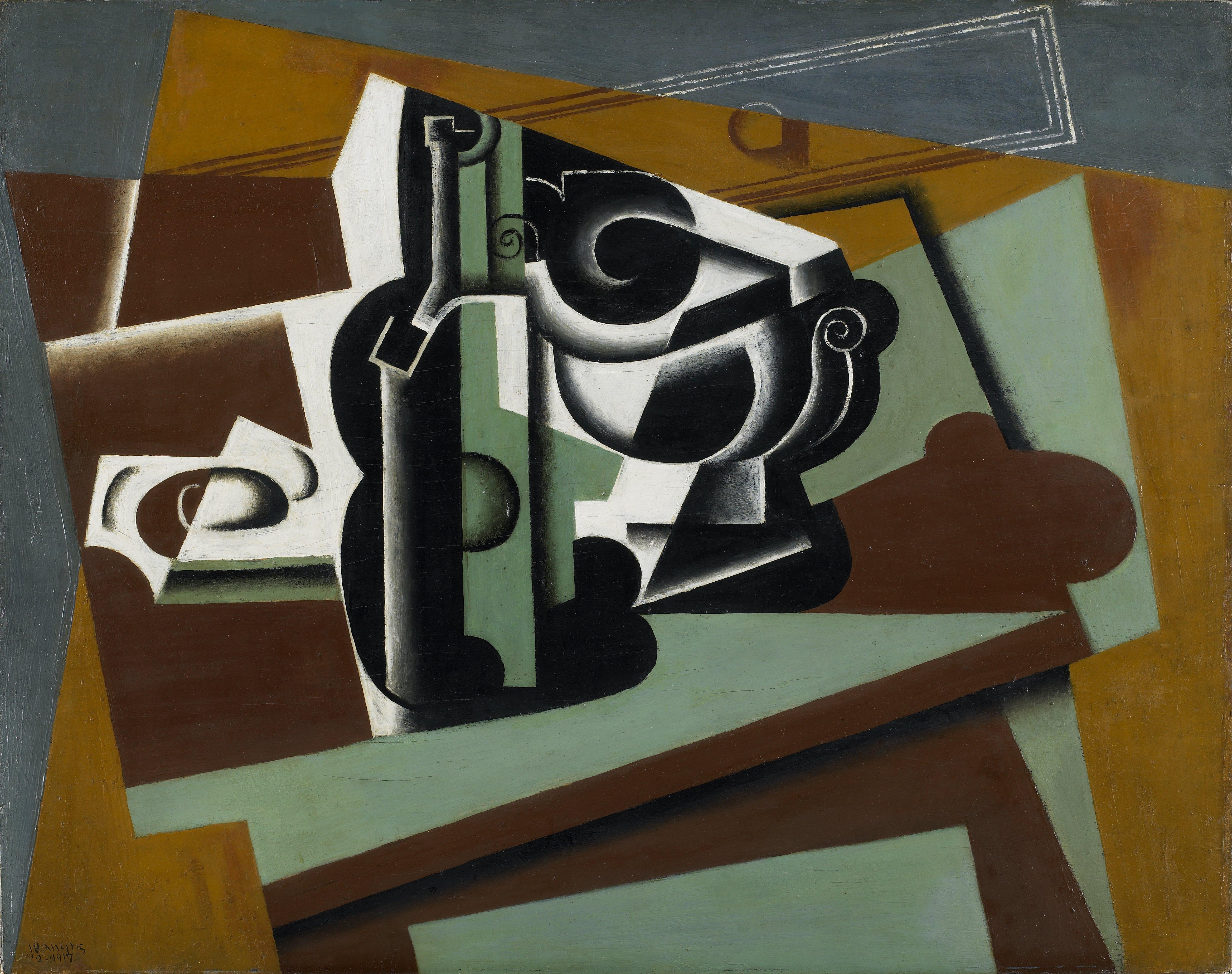
Juan Gris - Still Life - 51.20 - Minneapolis Institute of Arts
This is the most intellectually rigorous phase of the movement.
Analytical Cubism breaks down objects into small facets, almost like looking at them through a crystal prism.
Mandolins, bottles, human faces — all reinterpreted as intersecting planes.
A more colorful, more expressive, and more accessible phase.
Synthetic Cubism marked the birth of collage as a fine-art technique.
The goal was no longer to analyze form but to synthesize — to build new realities from layered textures and ideas.
Cubism’s influence extended far beyond painting.
Sculptors began to break the human figure and objects into sharp, angular structures, carrying the Cubist logic into three-dimensional form.
Major Cubist sculptors include:
This approach revolutionized modern sculpture, influencing everything from constructivism to contemporary 3D art.
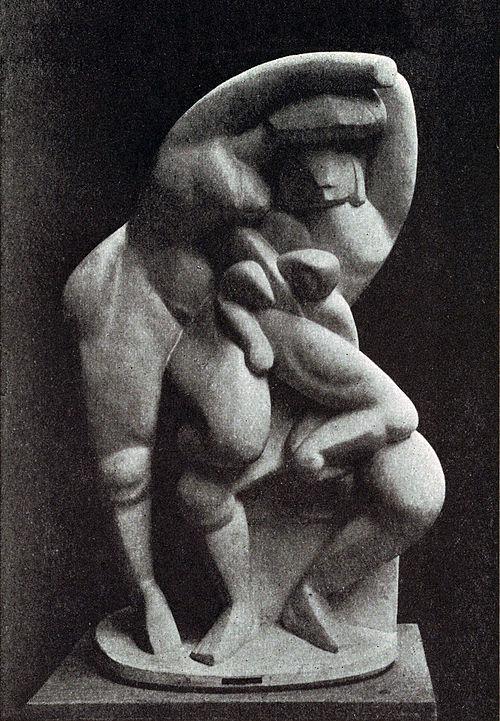
Alexander Archipenko, La Vie Familiale, Family Life, 1912
Cubism is often considered the catalyst for 20th-century modernism.
Its influence initiated or shaped:
No modern art movement developed independently of Cubism’s foundational shift.
Why Cubism Still Matters Today
Cubism remains relevant because it granted artists a new freedom:
the freedom to reconstruct reality according to thought rather than appearance.
Its legacy continues to shape:
In a world dominated by multi-layered digital perception, Cubism’s fragmented vision feels more current than ever.
Cubism is far more than an art movement — it is a revolution in perception.
By breaking reality into facets and rebuilding it with intellectual precision, Cubism transformed not only painting and sculpture but also the very foundations of modern creativity.
Its emphasis on multiple viewpoints, structural analysis, and reconstructed forms continues to inspire artists, designers, and thinkers over a century later.
Cubism didn’t just reshape art.
It reshaped how we see.
Cubism emerged in the early 20th century as one of the most decisive breaks from the long-standing tradition of Western representation. For centuries, painting had relied on the stability of single-point perspective, a method that suggested the world could be grasped from one fixed, unified viewpoint. Cubism challenged this assumption at its core. Rather than presenting objects as they appear from a single position, Cubist artists sought to reveal the complexity of perception itself—how forms shift, how space unfolds, and how an object might be understood from multiple angles at once. In doing so, Cubism redefined what it meant for art to depict reality, shifting emphasis from appearance to structure, from illusion to understanding.
The origins of the movement can be traced to the close collaboration between Pablo Picasso and Georges Braque, whose experiments around 1907–1908 initiated a radical reconsideration of form. Their partnership was grounded in a shared dissatisfaction with naturalistic representation. Influenced by developments in Cezanne’s late works—where objects begin to fracture into geometric volumes—Picasso and Braque pushed this idea to its conceptual extreme. They dismantled the illusion of depth, compressed spatial planes, and allowed shapes to intersect in ways that defied conventional perspective. What resulted was not simply a new style but a new logic of visual experience.
One of the distinctive contributions of Cubism was its insistence that objects possess more than one truth. A guitar, a bottle, or a human face is never perceived from a single vantage point in everyday life; we move around it, handle it, see it in varying light and context. Cubism attempted to capture this multiplicity within a single image by presenting several perspectives simultaneously. This approach produced compositions that at first glance may appear fragmented or abstract, yet they are grounded in an unusual form of realism—one that reflects cognition rather than sight alone. Instead of mirroring the external world, Cubist art mirrors the process by which we come to understand that world.
As Picasso and Braque refined this approach, their work evolved into what later became known as Analytical Cubism, a phase characterized by muted palettes, tightly interlocking geometric planes, and a near-complete rejection of pictorial depth. The restrained use of color served to highlight form rather than sensation; objects were dissected into facets, almost as if studied through a prism. In these works, representation becomes an act of analysis. The viewer is invited to reconstruct the depicted object by navigating the rhythmic arrangement of shapes, edges, and subtle clues—fragments of a curve that suggest a mandolin, the slope of a bottle, or the contour of a face. Analytical Cubism introduced a visual language that valued structure over illusion and understanding over appearance.
By around 1912, Cubism underwent a significant transformation that broadened its expressive possibilities. This later phase, often called Synthetic Cubism, introduced brighter colors, simpler shapes, and most notably, the pioneering use of collage. Picasso and Braque began integrating external materials—such as newspaper clippings, wallpaper, or printed textures—directly into their compositions. This technique challenged the traditional boundaries between art and everyday life, bringing elements of the real world into the pictorial space while simultaneously questioning the authenticity of representation. Through collage, Cubism expanded its inquiry beyond pure form to engage with meaning, context, and the relationship between visual signs and the objects they depict.
The implications of Cubism extended far beyond painting. In sculpture, artists such as Alexander Archipenko, Henri Laurens, and Jacques Lipchitz embraced the Cubist approach to volume and space, creating works in which forms are sliced, opened, or reorganized in unexpected ways. Cubist sculpture often treats empty space as an active component rather than a passive void; hollows and gaps become integral to the form, reflecting a new understanding of the relationship between interior and exterior. This rethinking of volume contributed significantly to the development of modern sculpture throughout the 20th century.
Cubism’s influence can also be traced across architecture, graphic design, literature, and even modern theories of perception. Its emphasis on structure and relational understanding resonated with movements such as Futurism, Constructivism, and De Stijl, all of which, in different ways, explored the abstraction of form and the mechanics of vision. Moreover, Cubism encouraged a generation of artists to view representation not as a mere imitation of the visible world but as a conceptual interpretation of experience.
What makes Cubism enduring is not only the visual form it introduced but the intellectual shift it represents. It challenged the centuries-old notion that art should strive to reproduce the world as it appears and instead proposed that art should reflect how we think about the world. By breaking objects into their structural components and presenting them from multiple viewpoints, Cubism asked viewers to participate actively in the formation of meaning. The viewer is no longer a passive observer but a collaborator in constructing the image.
In today’s visual culture—shaped by digital imaging, 3D modeling, and the layering of information—Cubism feels surprisingly contemporary. The idea that a single image can contain multiple perspectives, fragmented realities, and overlapping planes is now part of how we routinely process visual information. Cubism anticipated this complexity more than a century ago, offering a framework for understanding a world increasingly defined by multiplicity rather than unity.
Ultimately, Cubism transformed modern art by redefining the relationship between perception and representation. It demonstrated that the surface of things is only one aspect of their reality and that true understanding often requires dissecting, reorganizing, and re-seeing what appears familiar. Through its rigorous inquiry into form and cognition, Cubism opened the way for countless artistic developments and remains a cornerstone of modern visual thought.




Learn how artwork licensing works, how artists earn royalties, where to license their work, and how...
What should you consider when buying art for the first time? Learn about authenticity, artist research,...

Who buys artwork today? Discover the different types of art buyers, from collectors and interior designers...