In contemporary European painting, few artists have explored emotional intensity as directly as Marlene Dumas .
Over the last fifteen years, her work has remained central to discussions around vulnerability, identity, and the ethical responsibility of representation.
Dumas’ paintings often depict faces and bodies in states of exposure—sleeping, wounded, grieving, or suspended between presence and disappearance. Working primarily from photographic sources, she transforms images associated with documentation into emotionally charged painterly encounters. The result is a form of figuration that resists clarity and control, emphasizing uncertainty and fragility instead.
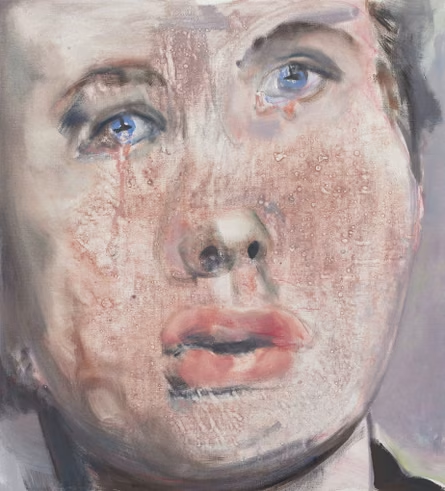
Rather than offering fixed narratives, Dumas’ work confronts the viewer with the emotional consequences of looking. Her paintings ask not only what we see, but how and why we see it.
Emotion, Vulnerability, And The Ethics Of The Painted Figure
Over the last fifteen years, contemporary European painting has increasingly grappled with questions of emotional visibility and ethical representation. Marlene Dumas stands at the center of this discourse, developing a painterly language that treats vulnerability not as subject matter alone, but as a structural condition of the image itself. Her work does not comfort; it unsettles. Through distortion, fluidity, and restraint, Dumas exposes the fragility inherent in both the painted figure and the act of looking.
Dumas’ practice is rooted in the transformation of photographic imagery. She often works from press photographs, archival images, and personal snapshots—sources traditionally associated with documentation and control. Yet in her hands, these images lose their authority. Faces blur, bodies dissolve, and expressions remain unresolved. The photograph’s claim to truth is replaced by painterly ambiguity. What emerges is not clarity, but emotional tension.
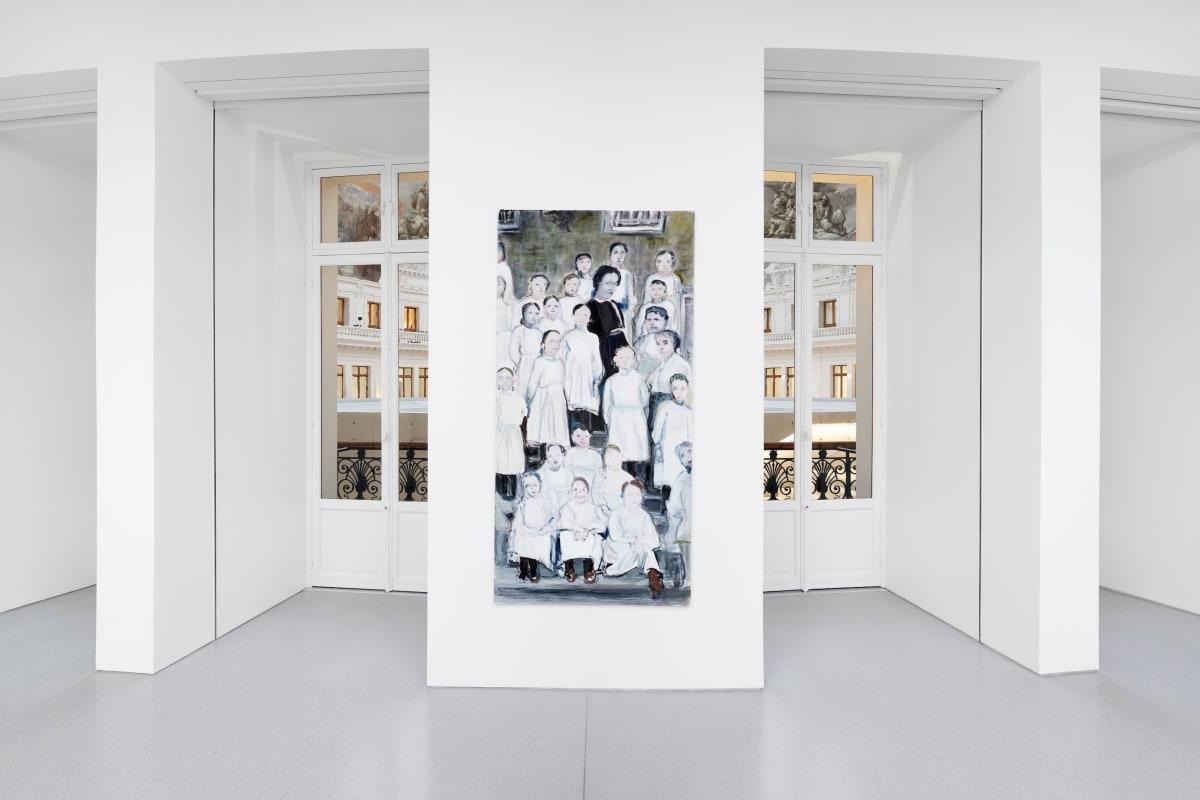
This tension is central to Dumas’ understanding of figuration. Her figures are neither idealized nor fully defined. Skin appears thin, permeable, and unstable. Color bleeds into form, erasing boundaries rather than reinforcing them. These choices resist the historical tradition in which the painted body is constructed as a stable object for consumption. Instead, Dumas presents the body as a site of exposure—open to interpretation, projection, and discomfort.
Emotion in Dumas’ work is never illustrative. She does not depict feelings as recognizable expressions; she allows them to inhabit the surface of the painting. Brushstrokes remain visible, tentative, and uneven. The image appears to hover between emergence and erasure, mirroring the instability of emotional states themselves. In this way, painting becomes less about representation and more about affect—how images make us feel rather than what they show.
Ethics play a crucial role in this process. Dumas’ work consistently raises questions about the power dynamics involved in representation. Who is being looked at? Under what conditions? And with what consequences? By refusing to stabilize her figures, she disrupts the viewer’s desire for mastery. Looking becomes an uncertain act, charged with responsibility rather than pleasure.
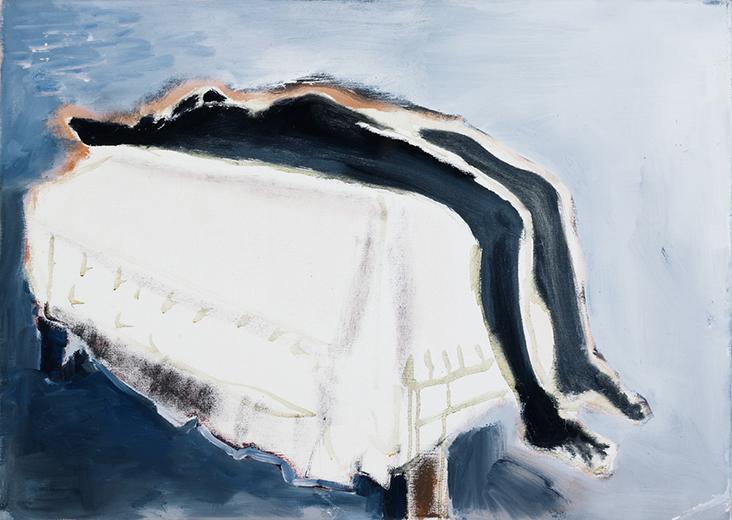
Within the context of European painting, Dumas’ influence lies in her insistence that figuration remains a site of moral and emotional inquiry. At a time when images circulate rapidly and often without consequence, her paintings slow perception down. They demand attention, empathy, and reflection. The viewer is not invited to consume the image, but to confront their own position within it.
Dumas’ impact is evident in a generation of painters who engage with the figure through fragility rather than dominance. Her work has expanded the possibilities of contemporary painting by demonstrating that emotional exposure can function as a rigorous artistic strategy. Vulnerability, in her practice, is not weakness—it is a form of resistance.
Ultimately, Marlene Dumas affirms painting as a medium capable of holding emotional complexity without resolution. Her figures do not offer answers; they pose questions. Through their instability, they remind us that seeing is never neutral, and that painting remains a powerful space where emotion, ethics, and representation intersect.



Pierre Soulages demonstrates that abstraction can achieve depth and intensity through radical simplicity and material focus.

Lynette Yiadom-Boakye painting, contemporary British figurative art, fictional portrait painting, time and presence in art, UK...

Cecily Brown demonstrates that contemporary painting can operate through excess, ambiguity, and desire rather than clarity...