Symbolism developed during the fin-de-siècle period, a time marked by cultural anxiety, spiritual uncertainty, and skepticism toward industrial progress.
Key influences included:
Symbolist artists believed that reality could not be fully understood through observation alone. Art, they argued, should explore the invisible and the irrational.
Images function as carriers of abstract ideas rather than literal narratives.
Scenes often resemble visions, dreams, or spiritual states.
Psychological depth replaces surface realism.
Ancient myths and legends are reinterpreted symbolically.
Interpretation is open-ended and personal.
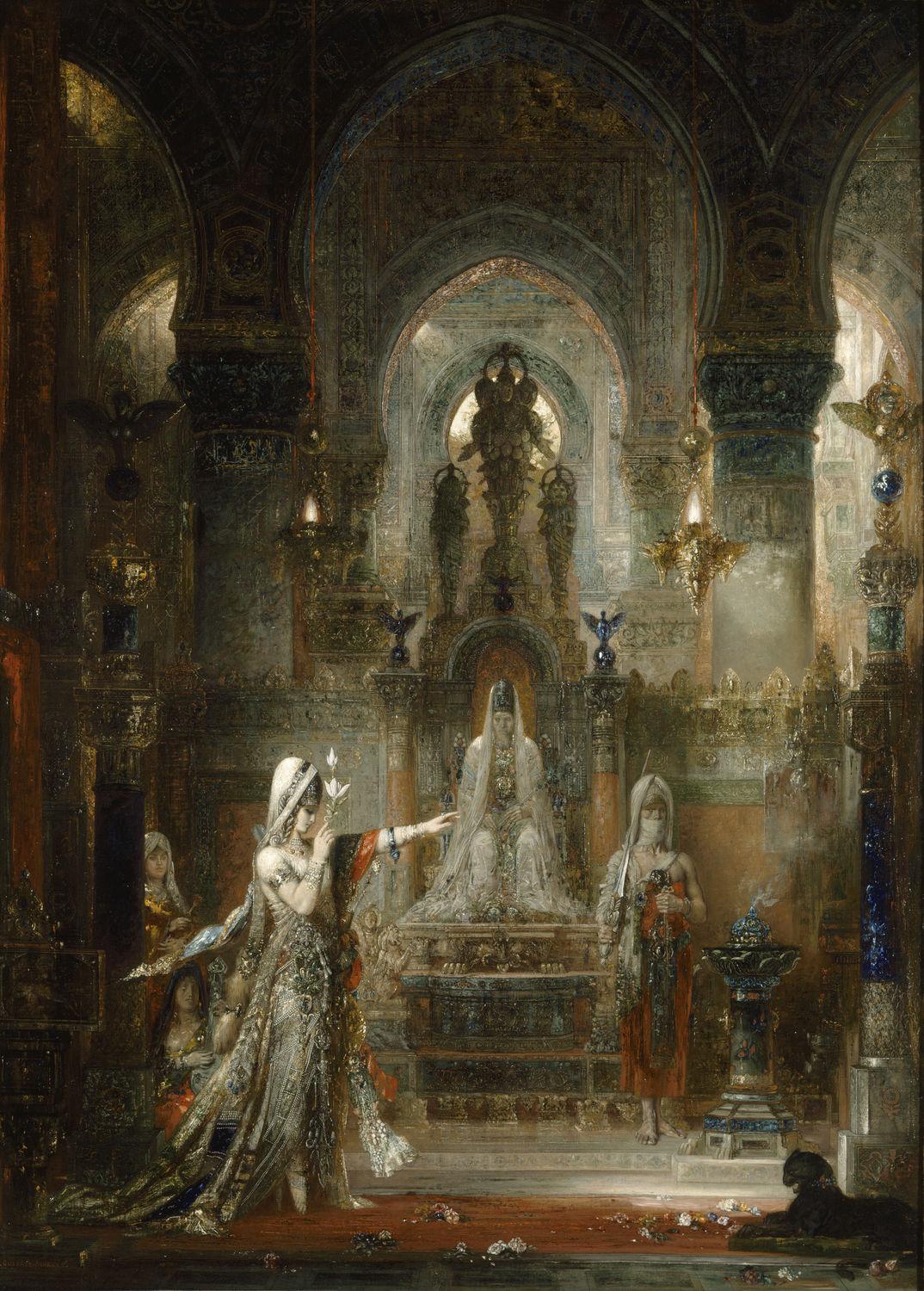
Gustave Moreau
Moreau used mythological and biblical themes to explore desire, violence, and spiritual transcendence through richly detailed, jewel-like surfaces.
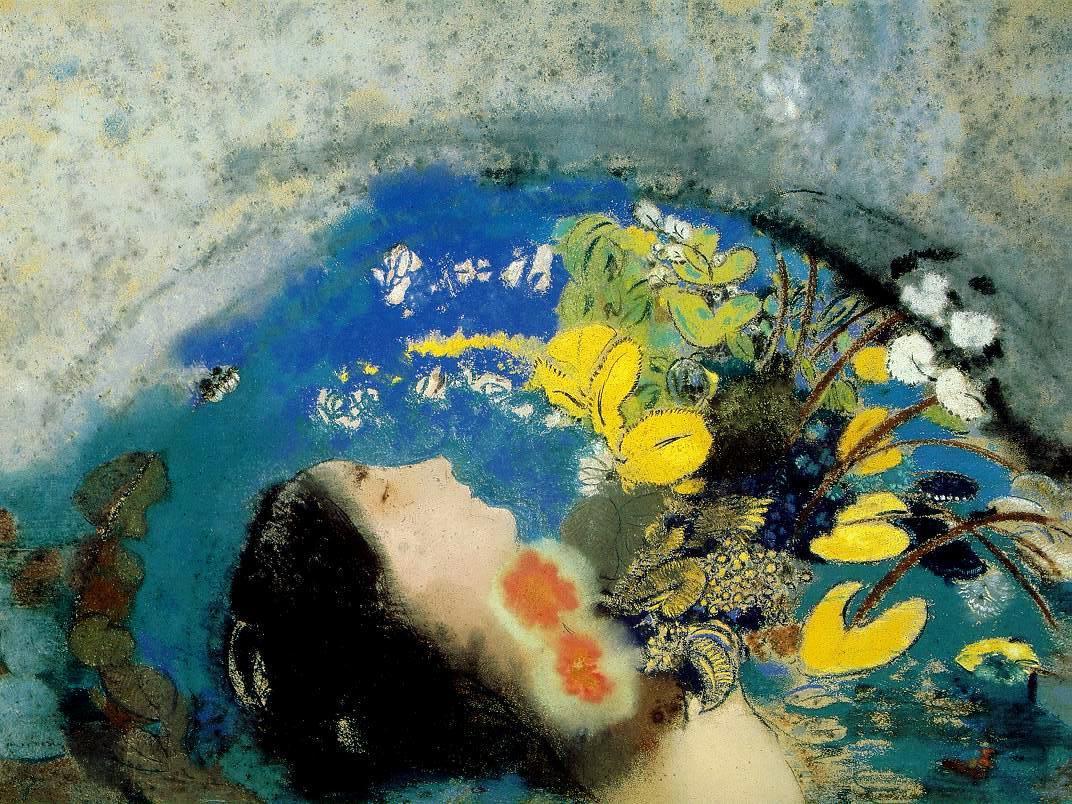
Odilon Redon
Redon’s work bridges the visible and invisible worlds, often featuring floating heads, eyes, and imaginary creatures drawn from dreams and the unconscious.
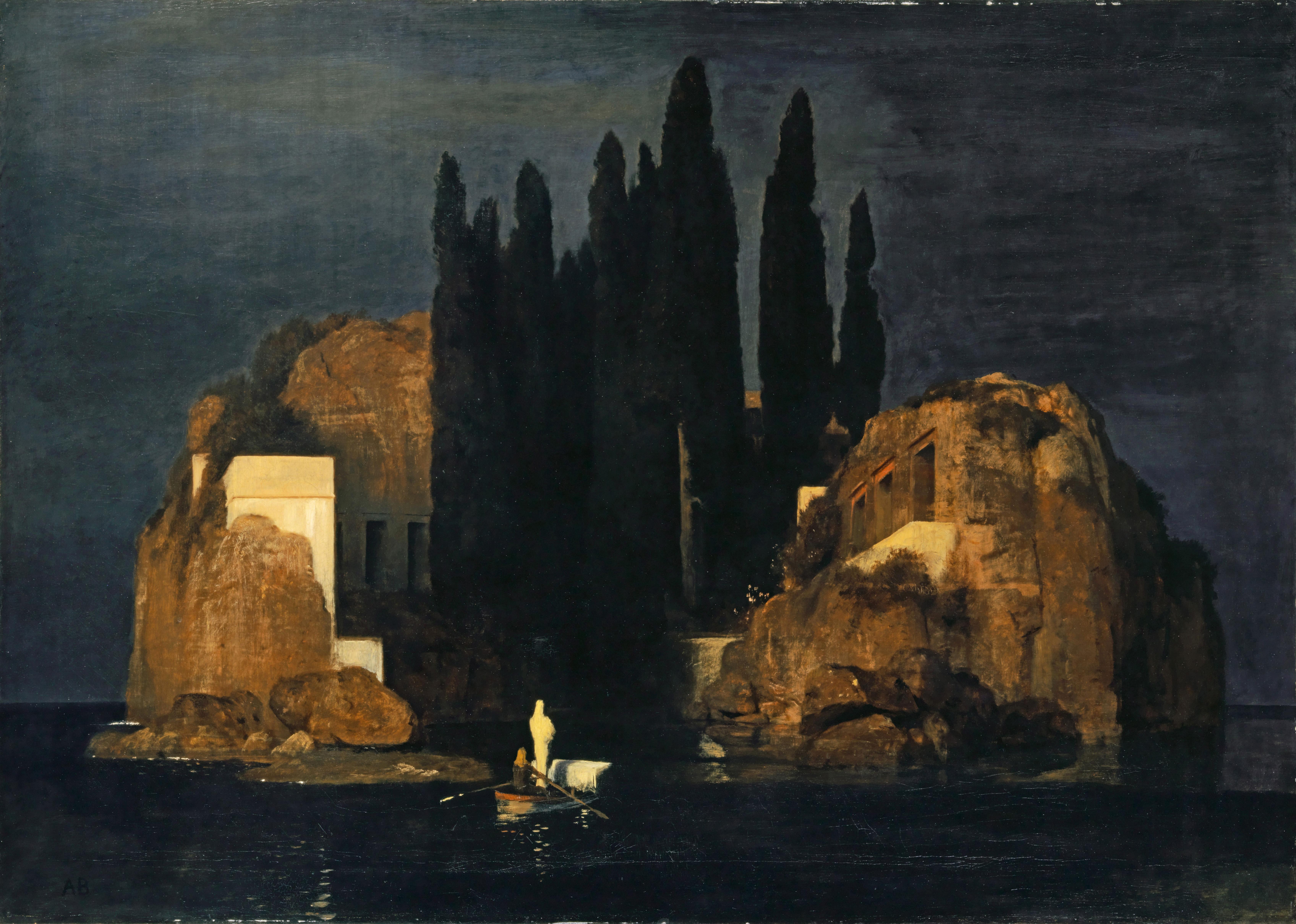
Arnold Böcklin
Böcklin’s haunting landscapes and allegorical scenes address themes of death, memory, and the passage between worlds.
Symbolism deeply influenced:
By prioritizing inner reality, Symbolism laid the intellectual groundwork for much of 20th-century modern art.
Symbolism emerged in the final decades of the 19th century as a response to a growing sense of spiritual and intellectual dissatisfaction within European culture. As industrialization advanced and scientific rationalism became the dominant way of understanding the world, many artists felt that something essential was being lost. The emphasis on measurable facts, visible surfaces, and material progress left little room for mystery, intuition, and inner experience. Symbolism arose from this tension, proposing that art should not describe reality as it appears, but rather reveal the deeper truths that lie beneath it.
At the core of Symbolist thought is the belief that reality is layered and that its most meaningful aspects cannot be grasped through observation alone. Symbolist artists rejected the idea that art should imitate the external world or document social conditions. Instead, they turned inward, using images as metaphors for psychological states, spiritual longings, and philosophical ideas. In Symbolist art, a flower, a mythological figure, or a shadowed landscape is never merely what it seems; each element functions as a sign pointing toward something unseen.
The intellectual foundations of Symbolism are deeply connected to poetry and literature. Symbolist poets such as Baudelaire, Mallarmé, and Verlaine emphasized suggestion over direct statement, believing that meaning should be evoked rather than explained. Visual artists adopted this poetic strategy, creating works that resist straightforward interpretation. The ambiguity of Symbolist imagery is deliberate: it invites contemplation, introspection, and personal response. Meaning emerges slowly, through association rather than narrative clarity.
Symbolist artists often drew inspiration from mythology, religion, and ancient legend, not as historical subjects but as symbolic frameworks through which universal human concerns could be expressed. Gustave Moreau’s mythological scenes, for example, are less about storytelling than about emotional intensity and spiritual conflict. His figures exist in timeless, dreamlike spaces where desire, violence, and transcendence intersect. Similarly, Arnold Böcklin’s recurring themes of death and isolation reflect an interest in the boundary between life and the unknown, rather than a literal depiction of mortality.
Odilon Redon occupies a particularly distinctive position within Symbolism. His early black-and-white lithographs depict strange, often unsettling visions—floating eyes, hybrid creatures, and disembodied heads—that seem to emerge directly from the subconscious. These images do not explain themselves; they exist as manifestations of inner experience. Later in his career, Redon’s use of color became more luminous and meditative, yet his focus remained on the invisible forces shaping perception and emotion. Through his work, Symbolism moves decisively toward the psychological concerns that would later define Surrealism.
Symbolism’s influence extends well beyond its immediate historical moment. By asserting that art could function as a vehicle for inner truth rather than external description, the movement helped redefine the role of the artist in modern society. Expressionism inherited Symbolism’s emphasis on emotion, while Surrealism expanded its interest in dreams and the unconscious. Even abstraction owes a debt to Symbolism’s conviction that meaning can exist independently of representational accuracy.
What gives Symbolism its lasting relevance is its insistence on mystery. In a world increasingly dominated by information, explanation, and visibility, Symbolism reminds us that not all truths can be articulated directly. Some must be felt, sensed, or intuited. Symbolist art does not offer answers; it poses questions. It invites the viewer into a contemplative space where meaning is unstable, personal, and deeply subjective.
Ultimately, Symbolism represents a turning point in modern art, marking the moment when inner life became a legitimate and central subject of artistic exploration. By privileging metaphor over realism and vision over observation, Symbolism expanded the possibilities of what art could express. Its legacy endures in every artistic practice that seeks to give form to the invisible dimensions of human experience.




Learn how artwork licensing works, how artists earn royalties, where to license their work, and how...
What should you consider when buying art for the first time? Learn about authenticity, artist research,...
Who buys artwork today? Discover the different types of art buyers, from collectors and interior designers...