Surrealism is one of the most revolutionary and imaginative movements in modern art. Emerging in the early 20th century, it sought to explore the depths of the human mind, revealing the world of dreams, the unconscious, and irrational thought. Surrealist artists believed that true creativity did not come from logic but from the limitless inner world hidden beneath conscious awareness.
More than a style, Surrealism was a philosophy of freedom — freedom from social norms, rationality, and traditional aesthetics.
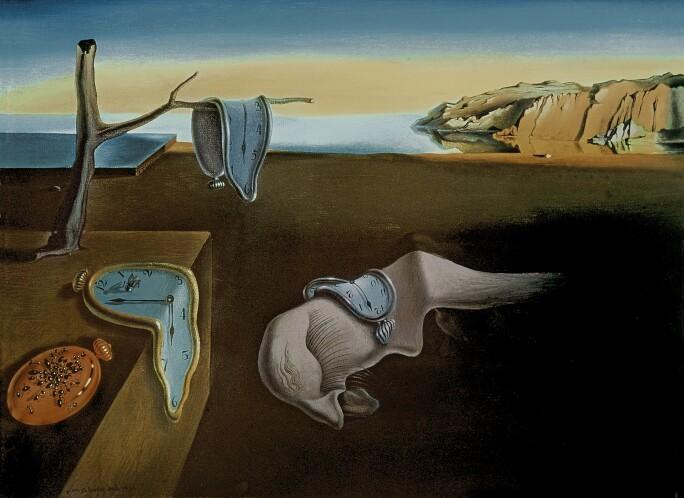
Salvador Dalí,The Persistence of Memory, 1931
Origins: A Movement Born from a Manifesto
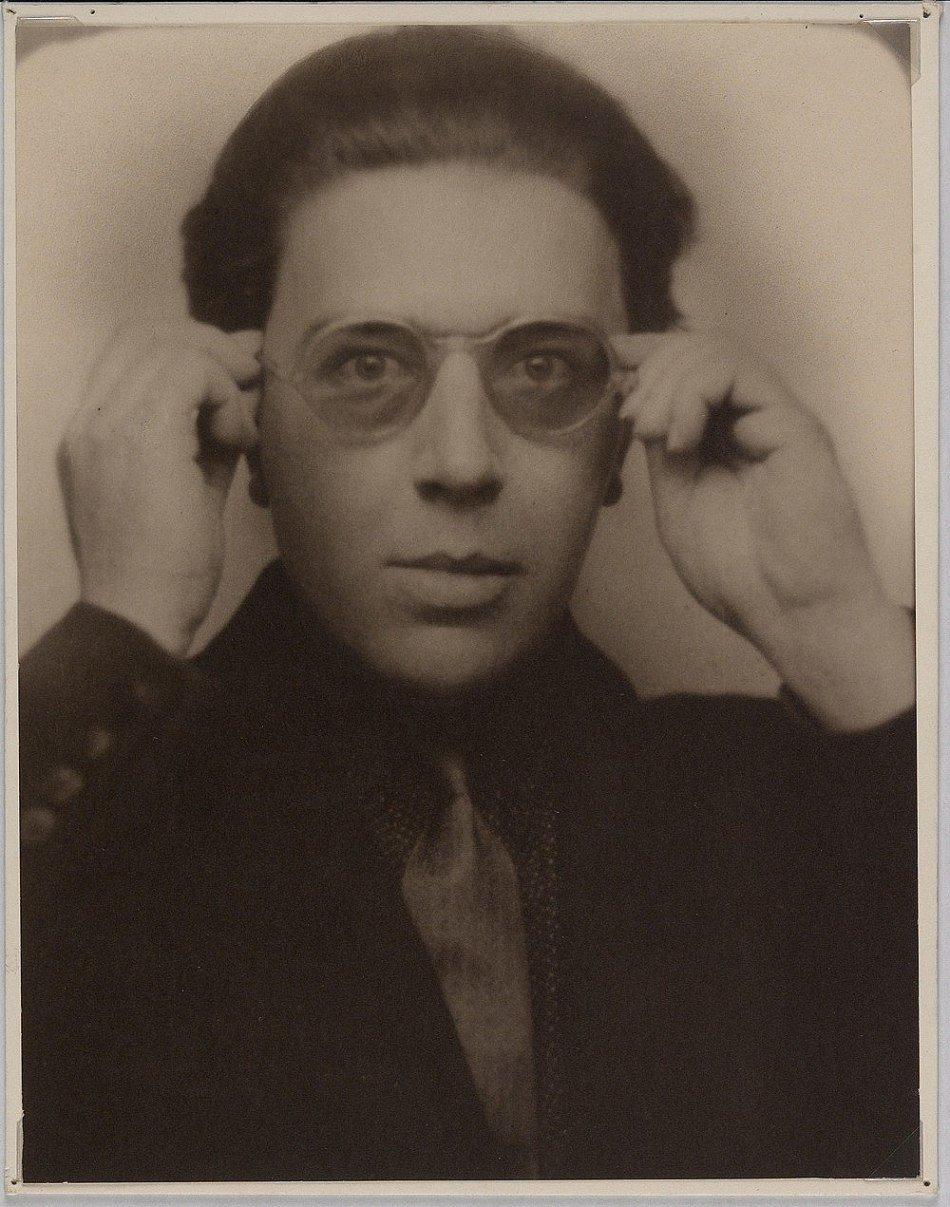
Surrealism officially began in 1924 with André Breton’s “Surrealist Manifesto.”
Breton, influenced by Sigmund Freud’s psychoanalysis, believed that dreams and subconscious desires revealed a deeper truth than rational thought.
The movement arose from:
Surrealists aimed to break the chains of logic and morality, opening the door to pure imagination.
André_Breton
Two Main Approaches in Surrealist Art
Automatic Surrealism uses spontaneous, uncontrolled creation. The artist produces without planning, letting the unconscious take the lead.
Key characteristics:
Major figures: Joan Miró, André Masson
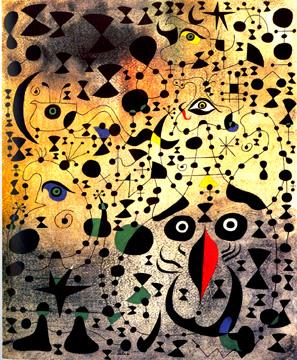
"The Beautiful Bird Revealing the Unknown to a Pair of Lovers" (1941) by the Spanish surrealist artist Joan Miró.
Illusionistic Surrealism (Dreamlike Realism)
This approach uses extremely realistic techniques to depict unrealistic, dreamlike scenes — the contrast creates a powerful psychological effect.
Key characteristics:
Key artists: Salvador Dalí, René Magritte, Paul Delvaux
Surrealism in Sculpture, Photography & Film
Surrealist sculpture often features:
Man Ray pioneered surreal photography through solarization and photograms, creating dreamlike distortions.
Luis Buñuel & Dalí’s Un Chien Andalou remains one of the most iconic surrealist films — shocking, symbolic, and deeply psychologica
Surrealism profoundly shaped many later movements:
Today’s digital artists — especially those using 3D software and AI — are direct heirs of Surrealism’s imagination.
Surrealism feels strikingly modern because we now live in a world where:
Surrealism reminds us that creativity begins where logic ends.
Surrealism liberated art from the visible world and introduced a universe shaped by dreams, emotions, and subconscious thought.
By challenging rationality, Surrealism allowed artists to express deeper truths — truths hidden beneath everyday consciousness.
Its influence is everywhere today, from cinema to fashion, from photography to digital art.
Surrealism did not merely change art.
It changed how we understand reality itself.
Surrealism emerged in the early 20th century as a response to a world that had lost faith in rationality. The aftermath of World War I created a climate in which many artists and thinkers questioned the stability of logic, order, and traditional cultural structures. Within this atmosphere, Surrealism proposed a radically different approach to creativity—one that shifted attention away from the visible world and toward the deeper, often concealed operations of the human mind. Rather than viewing dreams, impulses, and irrational thoughts as disturbances, Surrealist artists elevated them to the level of aesthetic and philosophical inquiry. The result was a movement that altered not only the visual arts but also modern ideas about consciousness and representation.
The movement’s intellectual foundation can be traced largely to André Breton, who published the Surrealist Manifesto in 1924. Breton’s text, influenced by Sigmund Freud’s theories of the unconscious, advocated for an art freed from the constraints of reason and moral expectation. He believed that creativity could only flourish when the artist relinquished conscious control and allowed the spontaneous flow of thought—unfiltered, uncorrected, unpremeditated—to guide the work. Freud’s ideas about dreams as symbolic expressions of hidden desires gave Surrealist artists a psychological framework within which to explore mental imagery not as random noise but as a legitimate source of meaning.
This belief in the significance of the unconscious led Surrealist artists to challenge conventional notions of reality. For them, reality was not limited to what the eye could perceive or what reason could explain. A truer, more complex form of reality emerged in the ambiguous space where conscious awareness meets internal imagery. As a result, Surrealist works often present familiar objects placed in unfamiliar or contradictory contexts—scenes that appear real at first glance but reveal deeper layers of strangeness upon closer inspection. This aesthetic does not aim to confuse for its own sake; rather, it seeks to expose the hidden structures of the mind by disrupting habitual ways of seeing.
The methods employed by Surrealist artists reflect this philosophical orientation. One of the most influential techniques was automatism—the practice of creating without deliberate intention. Through automatic drawing or writing, the artist attempted to bypass conscious decision-making and allow mental impulses to manifest freely. This process often produced organic forms, uncertain lines, and unexpected relationships that the artist would later interpret, almost as one might interpret a dream. Joan Miró is a notable example of an artist who transformed the principles of automatism into a poetic visual language marked by floating shapes, symbolic gestures, and a sense of intuitive rhythm.
A second major methodological strand within Surrealism involved the creation of highly detailed, illusionistic images that depicted impossible or irrational scenes. Salvador Dalí and René Magritte are among the artists best associated with this approach. Dalí’s precise rendering of melting clocks or decaying figures transforms dream imagery into vivid and almost hyper-real representations. Magritte, on the other hand, uses a more conceptual strategy by positioning everyday objects in paradoxical arrangements, prompting viewers to question the nature of representation itself. Both artists use realism not to affirm the visible world but to stretch its boundaries—demonstrating that clarity of form can coexist with complexity of meaning.
The diversity of artistic voices within the movement highlights Surrealism’s broad reach across mediums and disciplines. Max Ernst’s experiments with frottage and grattage turned random textures into suggestive imagery, bringing chance into the heart of the creative process. In photography, Man Ray’s solarized portraits and photograms challenged the assumption that photographs must faithfully record reality. Luis Buñuel’s collaborations with Dalí in film—most famously Un Chien Andalou—transferred the logic of dreams onto cinema, rejecting narrative coherence in favor of psychological intensity. The influence of Surrealism extended to literature as well, particularly through automatic writing practices that emphasized the uninterrupted flow of thought.
What makes Surrealism especially enduring is its capacity to adapt to changing cultural and technological contexts. The movement’s central idea—that the mind is a layered, unstable, and inexhaustibly rich source of imagery—remains relevant in contemporary art. Many of today’s digital artists, working with 3D modeling, virtual reality, and AI-generated imagery, explore precisely the kinds of spatial distortions and symbolic fusions that Surrealist artists pioneered. Even outside the arts, the Surrealist challenge to fixed definitions of reality resonates with modern philosophical and psychological discussions about perception and subjectivity.
Ultimately, Surrealism reshaped modern art by expanding the very definition of what art could represent. It freed artists from the obligation to imitate the visible world and encouraged them instead to engage with the invisible processes of the mind. The movement’s legacy lies not only in its iconic imagery but also in its assertion that creativity is fundamentally tied to the complexity of human consciousness. Surrealism continues to speak to us because it acknowledges that our inner worlds—our dreams, fears, and spontaneous thoughts—are not distractions from reality but essential parts of it. By bringing these elements to the surface, Surrealism invites us to reconsider how we understand truth, identity, and imagination.



Behind the decision to buy a work of art lies a complex world shaped by aesthetic...
What should you consider when buying art for the first time? Learn about authenticity, artist research,...
Who buys artwork today? Discover the different types of art buyers, from collectors and interior designers...